Bright and early yesterday morning, I jumped in the car and headed over to the Museum of Arts and Sciences (MOAS)* in Daytona Beach for the 2025 Bird Bash: Audubon Speaker Series.
*Update for 2026: MOAS now known as The Brown.
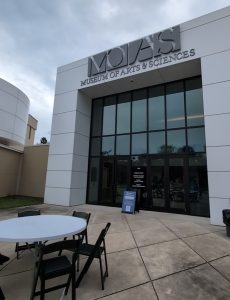
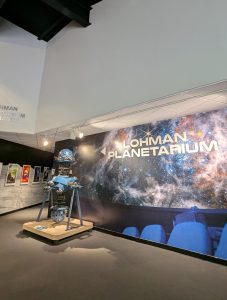
It was my first time there. What surprised me most was the wide variety of displays, ranging from mid-century train cars, teddy bears, prehistoric skeletons, one of the world’s largest Coca-Cola memorabilia collections—and a planetarium.

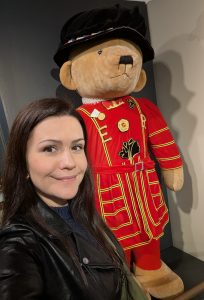
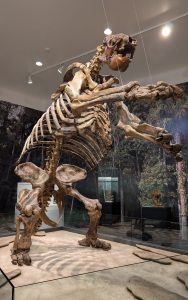
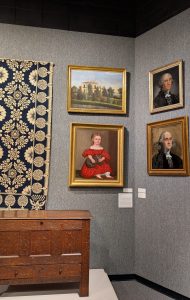
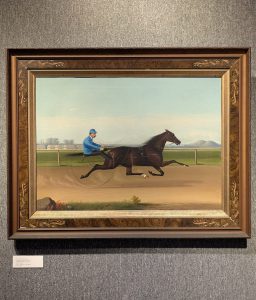
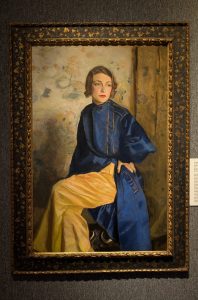
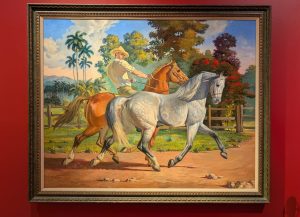
There was lots of art on display too. These were some of my favorites:
2025 Bird Bash: Audubon Speaker Series
As I settled into my seat in the Root Hall Auditorium, it was time for the main event.
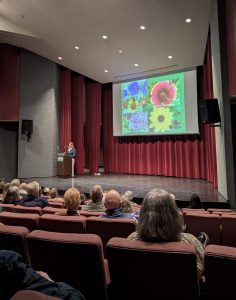
First up was Melissa Lammers, Board Member of Audubon Florida, who highlighted the importance of native plants for birds.
Native plants are crucial for birds because they provide the food and shelter that birds have evolved to rely on. And a big part of that is bugs.
Something that blew my mind: 96% of landbirds raise their young on insects 🤯 So if our landscapes are filled with pest-resistant alien or invasive plant species, bird parents won’t be able to find anything tasty and nutritious to feed their babies. Seed and nut feeders in our gardens are great, but they only feed adult birds.
In Melissa’s words:
No native plants, no bugs
No bugs, no birds
The result: dwindling bird populations 💔
So what can we do? Here are Melissa’s top tips:
- Get rid of invasive plants
- Be thoughtful with your landscaping:
- Put the right plant in the right place
- Water efficiently
- Fertilize appropriately
- Use mulch
- Manage pests responsibly
- Recycle your yard waste around the garden (leaf litter is free mulch!)
- Protect waterways by reducing pesticide runoff
We should aim for 70–80% native plants in our landscapes. A simple way to start is to reduce the amount of turf grass by creating islands of plants and mulch.
Some great Florida native plants for birds:
- Wild coffee (Psychotria)
- Beautyberry (Callicarpa)
- Dahoon holly (Ilex cassine)
- Purple passionflower (Passiflora incarnata)
- Asters: coneflower, blanket flower, coreopsis, marigold, dune sunflower
- Bushy bluestem (Andropogon glomeratus)
- Coral honeysuckle (Lonicera sempervirens)
- Fakahatchee grass (Tripsacum dactyloides)
- Muhly grass (Muhlenbergia capillaris)
- Spiderwort (Tradescantia)
- Bushy seaside oxeye (Borrichia frutescens)
- Beach verbena (Glandularia maritima)
If redoing your landscape is not feasible, one hopeful tip about bird feeders is that birds do take mealworms back to the nest for their young (note to self: buy several bags immediately)
I honestly had never made the connection between native plants and birds before. I’m planning to audit and revitalize my container garden (and make my peace with the prospect of my beloved caterpillars being eaten by birds!)
Melissa also shared some other useful tips:
- Plant saucers make great bird baths. Have several of them at different heights, including one filled with pebbles for pollinators.
- Clean your bird baths every other day, and sanitize them once a week (scrub with dish soap then rinse thoroughly)
Helpful links:
- Audubon Society Native Plant Search: find the best plants for your area, and where to get them
- Florida Native Plant Society: learn about Florida’s native plants
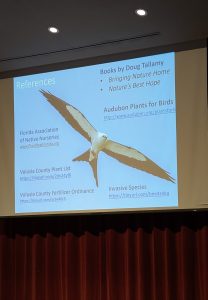
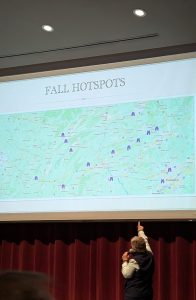
Next up was Joan Tague, President of Halifax River Audubon. She regaled the room with bird-related tales, covering everything from the history of Hawk Mountain, PA, to how to recognize raptors from below, to her favorite artwork of the Junior Duck Stamp Contest.
What I learned: book a fall trip to Hawk Mountain immediately!
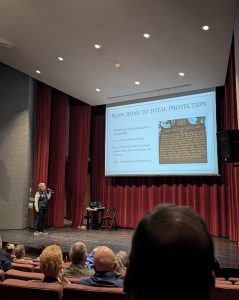
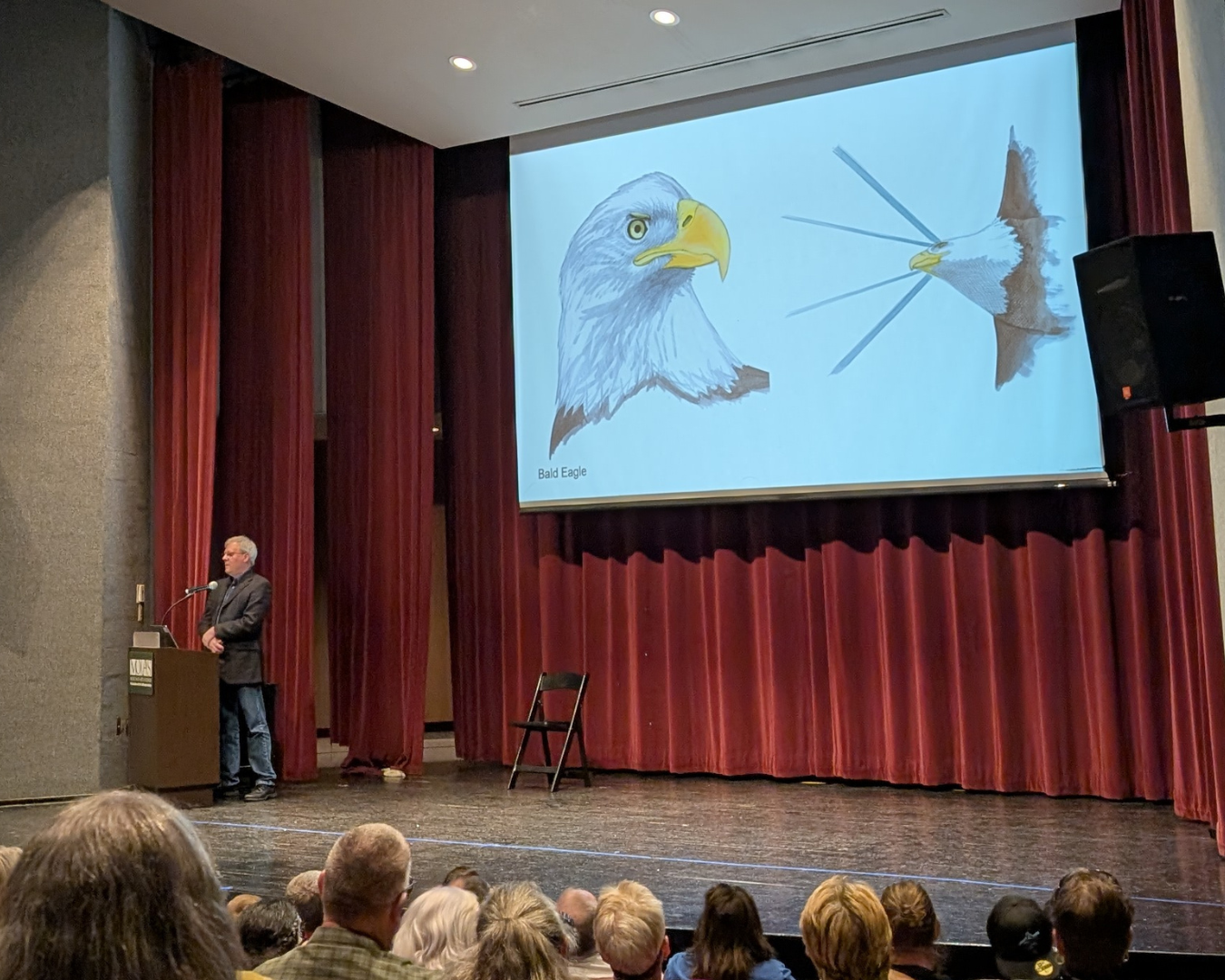
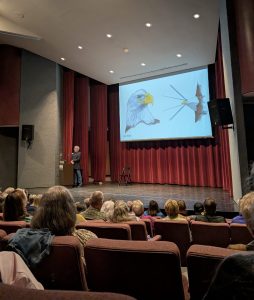
The final talk came from the author, illustrator and ornithologist David Sibley. Inspired by his latest book, What It’s Like to Be a Bird, he shared bird facts galore.
My favorites:
- While 240 mph is the highest recorded speed of a peregrine falcon, it may actually be able to reach 350 mph+
- TV and movies would look like slideshows to birds. The standard frame rate for a movie is 24fps—fine for us humans but annoyingly slow for birds, because they process visual information at a much faster rate (over 100 fps in some species)
- The Wilson’s snipe can see 360 degrees around and 180 degrees above, but cannot see its own beak
- Bald eagles have 340 degree vision, and when their head is turned to the side they’re looking right at you 👋
- Some of the poses of the birds in John James Audubon’s paintings are awkward, because they were shot and posed rather than observed in real life
Audubon’s Birds of Florida exhibition
I then drove the short distance from the main MOAS building over to the Cici and Hyatt Brown Museum of Art (included in admission; not really walkable because there’s no sidewalk, plus you’d melt in the summer) to see the Audubon’s Birds of Florida exhibition.
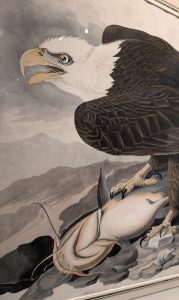
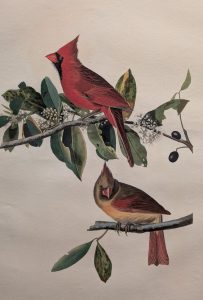
It features nearly eighty original prints, paintings, and related artifacts, focusing on a selection of birds the artist saw or wrote about from Florida in Ornithological Biography, as well as the majority of birds he painted while in Florida or shortly thereafter.
It was amazing to see all the intricate details up close, and I loved the intensity of the facial expressions!
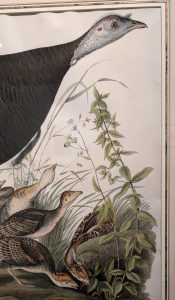
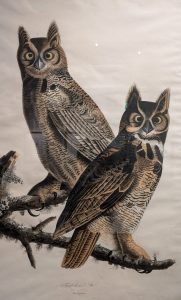
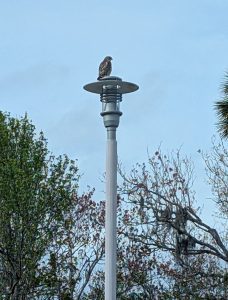
After a quick trip to the gift shop (where I picked up a greenshank print—love the hint of a smile and the view of St. Augustine in the background—and a roseate spoonbill postcard for my mum) I headed back to the car and spotted a red-shouldered hawk on a nearby lamppost 😍
Verdict: The 2025 Bird Bash was inspiring, and MOAS is definitely worth a return visit for the next one! This year’s event ended up selling out, so I’m glad I got my ticket about a month in advance. Tip: get there early to snag a parking spot, or you’ll have to park on a grass verge.
Are you a fan of Audubon’s paintings? Let me know your favorite bird!
Happy birding,
Elli